


Table of Content
Have you ever tried a personality test like the Myers-Briggs Type Indicator? If you have, you probably answered a series of questions to get insights into how you engage with the world. One interesting aspect the test reveals is whether you tend to make decisions more objectively (as a thinker) or subjectively (as a feeler).
Now, think of convergent and divergent thinking as similar to this aspect of the Myers-Briggs test. Whether you’re naturally more analytical or creative, the good news is that you can develop the ability to think in both ways.
In this piece, we’ll break down the distinctions between convergent and divergent thinking in the problem-solving process.
Additionally, we’ll explore why it’s essential to embrace both types of thinking to enhance your decision-making skills.
What is Convergent Thinking?
Convergent thinking is like having a focused problem-solving superhero in your mental toolkit. Picture it as the go-to strategy when you need to pinpoint the single most effective answer to a problem. It’s the precision player, leaving no room for ambiguity or multiple solutions.
In the convergent thinking arena, accuracy, speed, and logic take center stage, making it shine in situations where a problem already has a clear-cut answer waiting to be revealed through decision-making strategies. It’s your ticket to a swift, accurate, and crystal-clear resolution when the path forward is well-defined.
Convergent thinking is your go-to mental tool when tackling multiple-choice tests, quizzes, or standardized assessments. These scenarios thrive on questions with a single correct answer, leaving no room for ambiguity. Your task is clear: find that one precise answer through your knowledge, logical reasoning, or deduction skills.
It’s a binary outcome – the answer is either 100% right or 100% wrong. In the realm of convergent thinking, there’s no middle ground or alternative possibilities. It’s all about nailing down the correct response in situations where certainty is key.

What is Divergent Thinking?
Divergent thinking is a form of creative thinking focused on generating a multitude of imaginative ideas to explore a wide range of potential solutions. It entails opening up your mind to various directions and experimenting with different approaches to a problem.
Divergent thinking is characterized by its spontaneity, free-flowing nature, and non-linear process, yielding numerous unique and original ideas. In contrast to convergent thinking, divergent thinking isn’t suitable for scenarios like multiple-choice tests or quizzes where a single correct answer is sought.
The beauty of divergent thinking lies in its embrace of the absence of right or wrong answers, fostering a space for the exploration of many diverse possible solutions or new ideas, all within a short span.
What is the Difference Between Convergent and Divergent Thinking?
Let’s talk about convergent and convergent vs divergent thinking, terms coined by psychologist J. P. Guilford in 1956.
- Convergent Thinking: Imagine you’re aiming for that one spot-on solution to a problem. That’s convergent thinking for you. It’s like the go-to for logical tasks—perfect for things like acing multiple-choice tests or tackling problems where you know there’s just one right answer.
- Divergent Thinking: Now, flip the script. Divergent thinking is all about letting those creative juices flow. It’s your ticket to generating a bunch of ideas and coming up with multiple solutions to a challenge. Picture a brainstorming session where you’re exploring various answers to a question. But here’s the twist—even though it’s all about being creative, the end goal is the same as convergent thinking: finding the absolute best solution.
So, whether you’re narrowing down to that one perfect answer or casting a wide net to explore multiple possibilities, both convergent and divergent thinking play crucial roles in getting us to the best solutions.
Divergent vs. Convergent Thinking: Which is Best?
Think of convergent and divergent thinking as two essential tools in your problem-solving toolbox.
Divergent Thinking: This is your creative spark. Those who excel in divergent thinking bring vibrancy to a team, approaching challenges from multiple angles with fresh perspectives.
They’re the ones who think outside the box, exploring numerous new ideas—even the seemingly wild ones. Divergent thinking thrives on flexibility and creativity, making it a powerhouse for generating innovative concepts.
Convergent Thinking: Picture the detailed planner who meticulously dissects a problem. Convergent thinkers excel at methodically examining the nitty-gritty details and determining the most fitting course of action.
This mode of thinking is your efficiency booster, especially handy when time is tight and decisions need to be made promptly.
Why You Need Both:
- For Efficient Problem-Solving: Convergent thinking is your go-to when speed is crucial. It breaks down complex issues into manageable parts, preventing decision overload and ensuring swift problem resolution.
- For Creative Solutions: Divergent thinking is your creative powerhouse. It encourages flexibility, out-of-the-box ideas, and a full exploration of all possible options. This is key for fostering innovation and developing strong, unique concepts.
- The Ideal Combo: There’s no one-size-fits-all. Sometimes, you need the creative flair of divergence and, other times, the precision of convergence. Ideally, a dynamic problem-solving approach involves using both—divergent thinking to spark creativity and convergent thinking for efficient execution.
- Flexibility vs. Focus: Divergence is your flexible, creative thinking, while convergence is your focused, efficient approach.
- Balance is Key: Ideally, blend both types of thinking, knowing when to unleash creativity and when to streamline for execution.
So, whether you’re crafting innovative solutions or navigating the efficient execution of plans, having both convergent and divergent thinking in your toolkit ensures you’re well-equipped for any problem-solving scenario.
The Benefits of Divergent Thinking
As a project manager, the fast-paced nature of your role may make it tempting to stick to the familiar and make decisions swiftly.
After all, deadlines are looming, and clients expect prompt results. However, there’s a hidden gem in slowing down and embracing divergent thinking.
Why Divergent Thinking Matters:
- A Learning Mindset: Divergent thinking encourages a learning mindset. It pushes you to explore beyond your comfort zone, fostering a space where innovation and growth thrive.
- Identifying New Opportunities: By tapping into divergent thinking, you open doors to new opportunities. It’s about breaking free from the routine and uncovering paths that might have remained hidden in the rush.
- Creative Problem-Solving: Divergent thinking is your secret weapon for creative problem-solving. It propels you beyond the expected, allowing you to find imaginative solutions that stand out.
- Multiple Perspectives: It’s not just about your perspective. Divergent thinking prompts you to assess ideas from various angles, enriching your understanding and broadening your insights.
- Learning from Others: Collaboration is key, and divergent thinking enhances your ability to understand and learn from others. It’s a dynamic approach that acknowledges the strength of diverse perspectives.
Convergent vs. Divergent Thinking in Project Management
As a project manager, your primary objective is keeping things on course. Once the project scope, deliverables, and schedule are set, divergent thinking can seem like a potential disruptor, introducing new perspectives that may complicate your well-structured plans.
On the flip side, convergent thinking thrives on structure, aligning teams, and maintaining focus on a singular goal.
However, the allure of convergent thinking comes with a caveat—it can stifle innovation and hinder the agility essential for modern project management. Relying solely on solutions from the past limits creativity and adaptability, favoring the “getting things done” approach over fostering innovation.
Embracing divergent thinking, especially during brainstorming and ideation phases, offers a remedy. Even if not every idea is implementable, it opens fresh eyes and the door to a broader range of possibilities, breaking free from the constraints of conventional thinking.
Encouraging Divergent Thinking Process
1. Separate the Processes: Divergent and convergent thinking don’t always mix seamlessly. Kick off a project with a dedicated brainstorming session where creativity flows freely without judgment. Differentiate this creative process from the evaluation phase to save time and allow ideas to simmer.
2. True Brainstorming: Foster a true brainstorming environment where no idea is deemed wrong. Provide sufficient time between the creative phase and evaluation to let the great and best ideas develop organically.
3. Educate Your Team: Help your team understand the distinction between and encourage divergent thinking and convergent thinking. Empower them to contribute freely during the creative phase, promoting creativity morale and potentially uncovering groundbreaking solutions.
Successful project management requires a delicate balance of both thinking styles. By acknowledging the value of divergent thinking and creating an environment where it can flourish, you empower your team to dream up big ideas, innovate, and deliver exceptional outcomes.
Use Convergent and Divergent Thinking for Creative Problem Solving
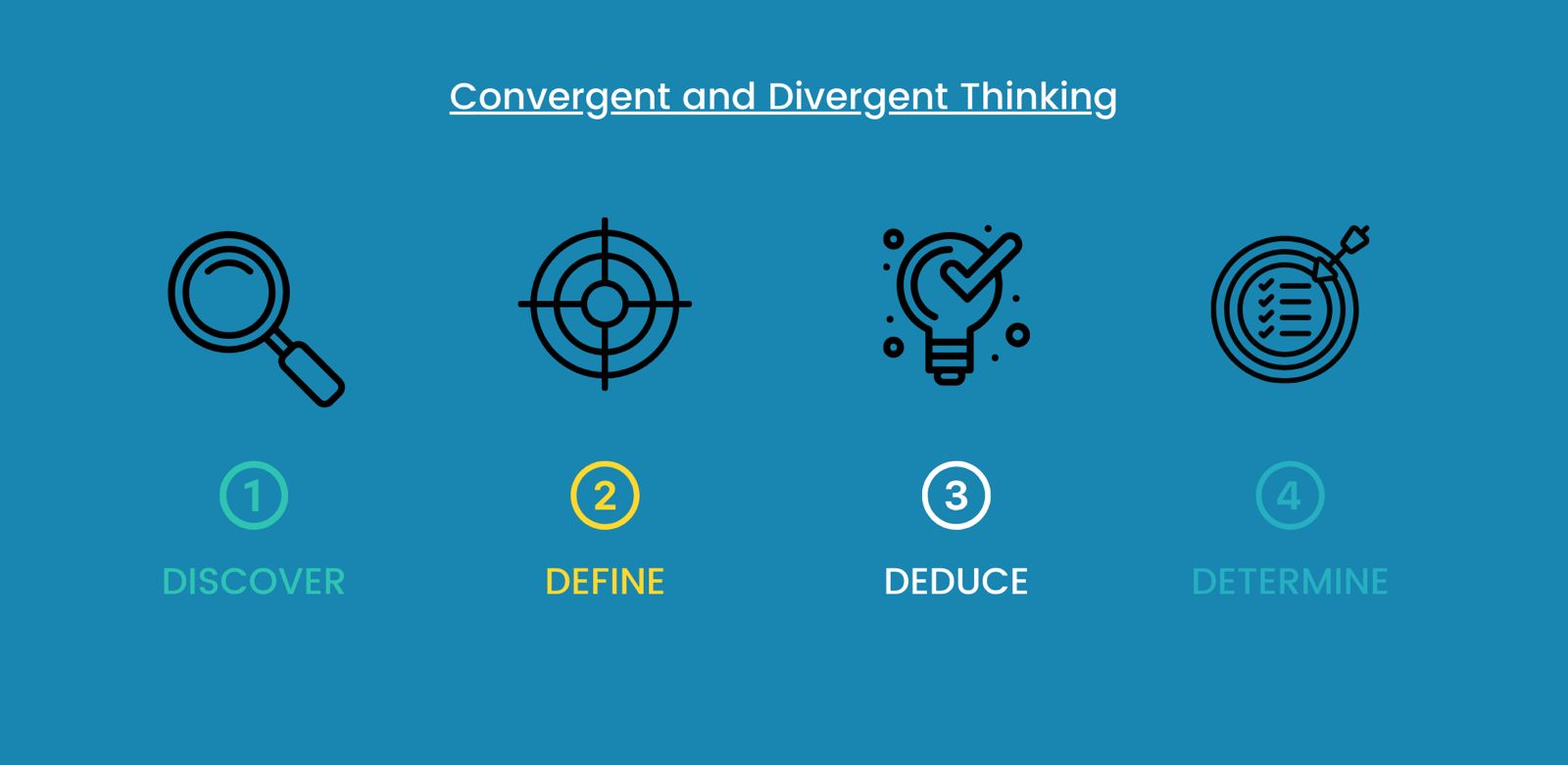
In the world of project management, the synergy of convergent and divergent thinking is your ticket to effective problem-solving. Let’s break down how this dynamic duo can lead you from problem discovery to a solution-driven conclusion.
1. Discover: Unleash Divergent Thinking
When a problem arises, the first step is discovery. Divergent thinking takes the stage right balance, encouraging you to explore all possible facets of the issue.
If projects consistently run over budget, consider potential causes like lack of communication, improper resource allocation, or issues with project planning.
2. Define: Focus with Convergent Thinking
Convergent thinking steps in to narrow down potential causes. It’s about choosing the most critical factor to address, even if multiple causes exist.
If poor project planning seems to be a major cause, focus on it. Recognize that causes may intertwine, and improvements in one area can positively impact others.
3. Deduce: Dive Back into Divergent Thinking
Back to divergent thinking as you continuously brainstorm for solutions. For budget overruns due to poor project planning, potential fixes may include using project plan templates, enhancing stakeholder communication, thorough research, or implementing cost control measures.
Explore all options before settling on one style as the most effective solution.
4. Determine: Converge for Decision-Making
Convergent thinking returns for the final decision-making stage. Evaluate the solutions proposed and determine which ones will be optimal and the best solution to eliminate the problem.
Example: After discussing with your team, decide that incorporating cost control methods into your management plan is a decisive action to prevent budget overruns and enhance overall financial efficiency.
How to Be a More Divergent Thinker
Becoming a better sense, a more divergent thinker, is like giving your brain a well-rounded workout, ensuring you approach problems from every conceivable angle. Let’s delve into practical strategies that can stimulate your divergent thinking:
1. Reflect on Your Thinking Process
- Simple Yet Powerful: Start by being mindful of divergent thinking. Integrate steps in your processes that actively encourage it.
- Example Strategies:
- Introduce Breaks Before Big Decisions: Allow at least a one-hour break before making significant decisions.
- Embrace Team Perspectives: Put yourself in your team’s shoes, considering various viewpoints before deciding.
2. Embrace Brainstorming and Mind Mapping
- Unleash Creativity: Engage in brainstorming and mind mapping to break free from conventional thinking.
- Example Techniques:
- Starbursting: Use a visual six-point star to explore who, what, when, where, why, and how.
- SWOT Analysis: Evaluate strengths, weaknesses, opportunities, and threats for a comprehensive perspective.
- Lightning Decision Jam: Identify positives, negatives, and urgent concerns to foster thorough brainstorming.
3. Break Free from Time Constraints
- Pressure-Free Decision-Making: While deadlines are inevitable, try to alleviate the pressure during crucial decision-making moments.
- Pressure-Relieving Techniques:
- Request Meeting Agendas: Prepare in advance by requesting agendas to understand topics thoroughly.
- Timeboxing: Allocate short intervals (5-10 minutes) for idea generation without rigid time constraints.
4. Leverage Work Management Software
- Digital Collaboration: Harness the power of work management software like Asana to stimulate divergent thinking.
- Benefits Include:
- Collaborative Project Work: Enhance teamwork and idea-sharing.
- Quick Idea Sharing: Facilitate rapid exchange of ideas and feedback.
- Effortless Changes: Make instant modifications to keep projects dynamic and responsive.
5. Embrace Curiosity and Risk-Taking
- Challenge Conventions: Break away from convergent thinking habits by encouraging curiosity and risk-taking.
6. Encouraging Strategies:
- Foster a Culture of Curiosity: Encourage exploration beyond traditional processes.
- Balancing Act: Recognize when to adopt a quick, structured approach (convergent thinking) and when to keep an open mind (divergent thinking).
Conclusion
In wrapping up, the key distinction between convergent and divergent thinking boils down to their outcomes: convergent, focused thinking yields a solitary effective solution, whereas divergent thinking births a myriad of other creative ideas and solutions. Beyond this, convergent thinking operates with precision, speed, and logic, while divergent thinking takes on a spontaneous, free-flowing, and non-linear approach.

Anja Bosiok ist Marketing Managerin bei TimeTrack und schreibt seit über drei Jahren über Zeitmanagement, moderne Arbeitswelt und digitale HR-Prozesse. Sie studierte Journalismus (Bachelor) sowie Publizistik- und Kommunikationswissenschaft (Magister) und verbindet redaktionelle Präzision mit tiefem Produktverständnis. Zuvor war sie als Content Managerin bei TimeTrack tätig und begleitet seitdem die Themen rund um Arbeitszeiterfassung und Personalorganisation – von der gesetzlichen Grundlage bis zur praktischen Umsetzung im Unternehmensalltag.

