Variation: Navigating Change
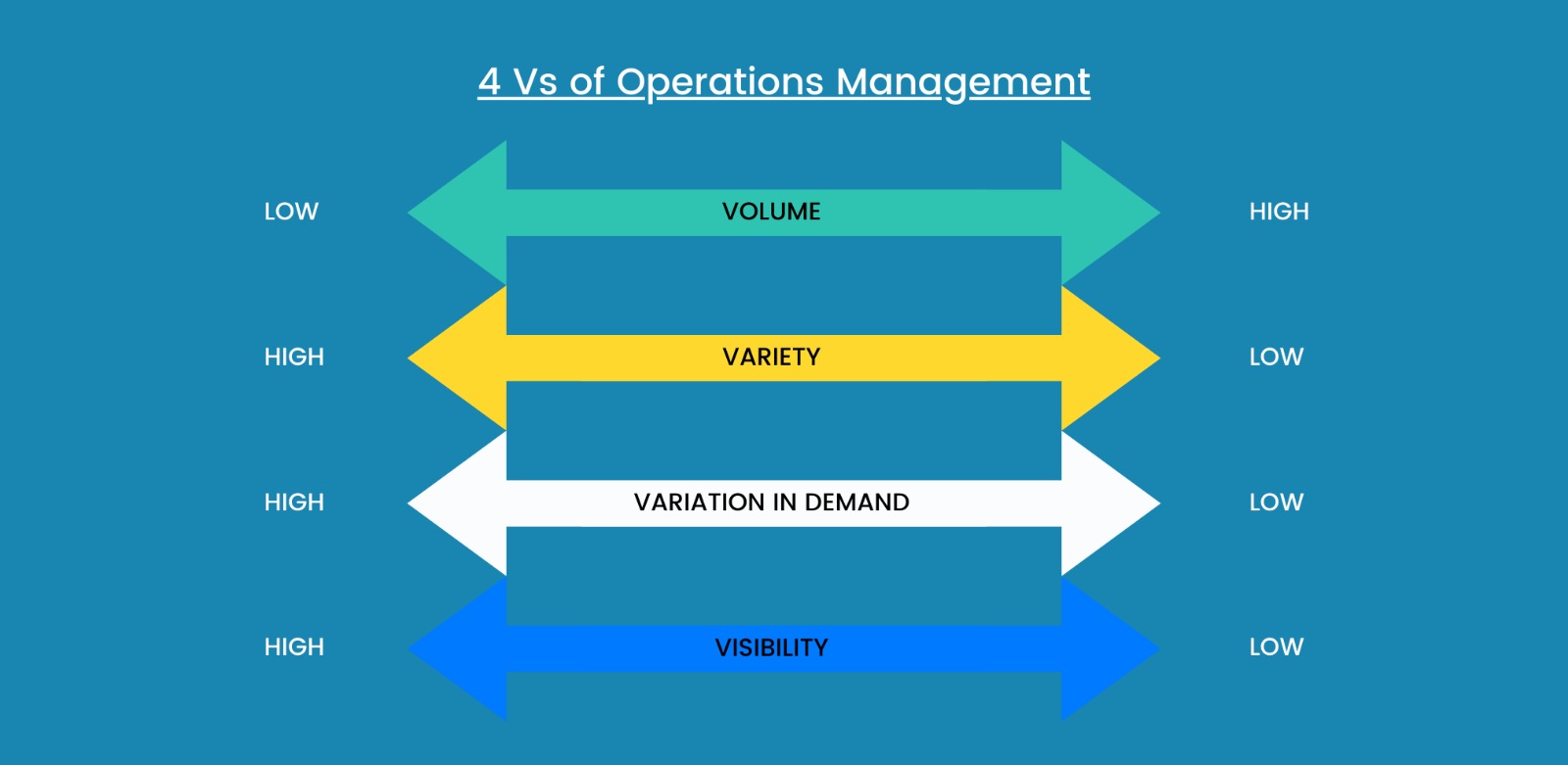
Now, let’s explore the third dimension of operations, known as “Variation.” This aspect pertains to the level of change and predictability in demand that a business’s operations encounter.
Some operations contend with significant demand fluctuations, influenced by a physical number of external factors, like seasons, days of the week, or customer behaviours.
Variation encompasses not only volume dimension, not only the level of change in demand but also how “predictable” these fluctuations are—the degree of demand uncertainty. For instance, an ice cream vendor or retail store can reasonably predict increased sales during summer.
Still, it may struggle to anticipate when an emergency hospital department, taxi service, bus service, taxi company or retail store might experience a sudden surge in demand.
While a very high degree of demand variation is a reality for many businesses, efforts should be made to minimize it where possible actively. Demand Management strategies aim to smooth out demand, reducing uncertainty and variation in the load placed on business operations.
Businesses dealing with high demand and low-cost model variation need to:
- Flexibility: Be adaptable to changes in capacity
- Anticipation: Anticipate changes in demand based on cues
- Customer Focus: Stay closely aligned with true customer demand
- Buffers: Maintain buffers of inventory, capacity, and time to react and deliver
These adjustments often come at a cost, leading high-variation businesses to have higher unit costs. However, they may be able to command higher prices if they effectively respond to demand changes and meet fluctuating demand.
Example: Ice Cream Vendor vs. Emergency Hospital Department
- Explanation: An ice cream vendor experiences demand variation tied to seasons, with higher sales during summer months. On the other hand, an emergency hospital department faces unpredictable demand variation, as emergencies can happen at any time, leading to fluctuating patient numbers.