


With the rapid pace of technological advancements, upskilling helps employees stay current and proficient in using new tools, software, and emerging technologies. This enables companies to leverage the latest innovations and remain competitive in the market.
Table of Contents
As the demand for new skills and technological proficiency continues to surge, companies understand that upskilling their workforce is not just a strategic imperative but also gives them a competitive edge. Employee upskilling involves providing them with additional training, knowledge, and expertise to enhance their existing skillsets.
In this way, companies invest in future growth by preparing staff to for emerging challenges and opportunities. Employee upskilling goes beyond basic training and encompasses an intense development approach that cultivates both technical and soft skills.
Definition
Employee upskilling refers to the process of providing additional training, education, and development opportunities to broaden and improve the skills and knowledge of existing employees. It involves equipping employees with new or upgraded competencies, often related to emerging technologies, industry trends, or evolving job requirements.

The goal of employee upskilling
The ultimate objective of upskilling is to enable employees to perform their current roles more effectively or to prepare them for future responsibilities within the company.
Upskilling initiatives typically involve formal training programmes, workshops, mentoring, and on-the-job learning experiences. By investing in upskilling, companies contribute to employee growth, increase productivity, drive, innovation, and the ability to evolve as the market demands.
It is a proactive approach to talent development that benefits companies and staff and does a lot for employee engagement. When employees feel they are valued and worth being invested in, they tend to be more loyal and motivated toward the company.
Assessing employees’ upskilling needs with TimeTrack
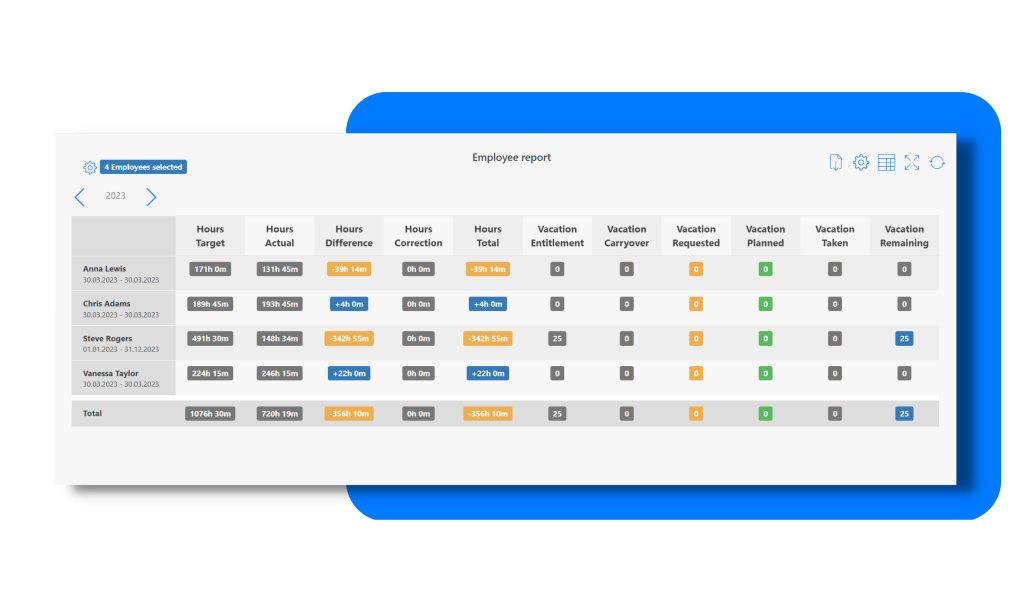
Upskilling employees is an important part of improving everyone’s productivity. To facilitate this process, software features such as TimeTrack’s HR Reporting can prove invaluable for HR managers. These comprehensive reports offer a wealth of interesting data, and can empower professionals to make informed decisions. In this way, managers can easily streamline employee development efforts.
One key feature of detailed HR reporting is the ability to track targeted and actual hours. This allows managers to assess whether employees are meeting their goals and identify areas for improvement. Through this analysis, HR professionals can ensure accurate timekeeping and make necessary adjustments.
Moreover, these reports provide insight into total hours worked, enabling efficient resource allocation and workload management. Additionally, vacation entitlement and carryover data offer a comprehensive view of employees’ leave balance.
By leveraging these software features, HR professionals can maximise their understanding of workforce dynamics and make data-driven decisions regarding employee upskilling.
Benefits of employee upskilling training
Upskilling your employees brings about some amazing benefits, not just in their professional development, but for the company, too.
Here are some key reasons to make this investment.

Best practices for employee upskilling programmes
In the wake of COVID-19, floundering economies and employees’ mental health more important than ever, an upskilling strategy can do a lot to address workplace challenges, and help in retaining top talent.
Companies should ensure that upskilling opportunities are available to everyone and incorporates new technologies and modern digital skills. The objective is career development, but also the company’s ability to set itself up for long-term success. You want employees to feel valued but you also need the company to generate revenue for a long time to come and maintain a competitive advantage.
Leaders must view upskilling as a long-term business investment rather than a mere expense. Set clear business objectives and align upskilling programmes with cross training, job roles and key performance indicators (KPIs).
It’s important to be inclusive. Upskilling training courses should blend different skills and learning styles and be as accessible for high performing employees as well as juniors.
Job satisfaction
Job satisfaction is important. When staff are exposed to an environment that prioritises ongoing training and has an upskilling strategy, they are more likely to be more creative, motivated and excited in their daily work. Upskilling drives a culture of creativity and encourages a growth mindset amongst the workforce.
Tip
While technical skills are important, don’t overlook the importance of developing soft skills such as communication, leadership, problem-solving, and adaptability. These skills never go out of style!
Tips for creating an employee upskilling strategy
Start by evaluating the skills and competencies of your workforce. Identify the areas where it’s clear there are gaps in development and align these with business goals and individual career aspirations.
Encourage a culture that values continuous learning and professional growth. Prompt employees to pursue learning opportunities and provide support for their development.
Offer a range of learning methods such as workshops, online courses, mentorship programs, job rotations, and on-the-job training. Different employees will have different learning preferences, so provide options to accommodate diverse learning styles.
Help employees set clear and specific development goals that match their roles and future career aspirations. These goals can provide a roadmap for their learning journey and help track progress.
Promote knowledge-sharing within the company with regular communication and collaboration amongst employees. This can be achieved through team meetings, communities of practice, or internal social platforms.
Conclusion
If you want your company to succeed and be around for a long time, it’s vital to compile an upskilling strategy that will help you retain talent, develop relevant skills and improve job satisfaction.
With these newly acquired skills, your team will be able to use their diverse talent to the company’s benefit, contributing to its competitive advantage.
Modern employees value an environment that has a strong learning culture and the benefits of upskilling can significantly boost employee morale and make a definitive difference on the company’s culture and bottom line.

Anja Bosiok ist Marketing Managerin bei TimeTrack und schreibt seit über drei Jahren über Zeitmanagement, moderne Arbeitswelt und digitale HR-Prozesse. Sie studierte Journalismus (Bachelor) sowie Publizistik- und Kommunikationswissenschaft (Magister) und verbindet redaktionelle Präzision mit tiefem Produktverständnis. Zuvor war sie als Content Managerin bei TimeTrack tätig und begleitet seitdem die Themen rund um Arbeitszeiterfassung und Personalorganisation – von der gesetzlichen Grundlage bis zur praktischen Umsetzung im Unternehmensalltag.

