


Effective communication is a prerequisite for success in any position. Strong communication skills enable employees to convey their message plainly and effectively, whether communicating with co-workers, customers, or stakeholders.
Table of Contents
In today’s fast-paced and ever-changing business environment, it is impossible to exaggerate the significance of staff skills training. With new technologies, changing consumer demands, various business needs and shifting industry trends, organisations must invest in the professional development of their employees to remain competitive and successful.
Definition
Skills training is the process of educating and acquiring specific skills to increase the workforce’s effectiveness and productivity. Skills training aims to assist employees in learning and developing new or improving existing skills, thereby enhancing their ability to perform their tasks more effectively.
As the business environment evolves swiftly, investing in staff training has become increasingly essential. By taking these steps, you can increase employee morale and satisfaction, your organisation’s performance and market competitiveness.

Does your staff require skills training?
The answer is an emphatic affirmative. Employees must be able to execute their tasks efficiently and effectively.
Lack of investment in skills training can result in a variety of adverse outcomes for your organisation, such as:
Productivity declines when employees need more skills to execute their tasks. This can result in missed deadlines, subpar work, and lower profits.
Employees become frustrated and dissatisfied when they cannot conduct their tasks effectively. This can result in high employee turnover and difficulty retaining top talent.
When employees lack appropriate training, they may make errors that can affect the business’ bottom line. For instance, a salesperson who lacks certain skills may be unable to conclude transactions, resulting in revenue loss for your organisation.
Cost is another essential factor to consider when it comes to staff training. Training can be costly, but viewing it as an investment in the organisation’s future is necessary. Equipping employees with relevant skills and knowledge increases productivity and efficiency, reduce employee turnover, and ultimately boosts your organisation’s market competitiveness.
Consider leveraging cost-effective training options such as online courses or seminars. Utilise in-house trainers and mentors when possible to reduce training costs. Consider collaborating with other companies to offer training opportunities to help reduce costs while still providing your staff with high-quality training.
Tip
If you want to increase your organisation’s competitiveness, build an effective personnel plan, and boost employee morale and satisfaction, it’s vital to invest in staff skills training.
Managing staff and their duties
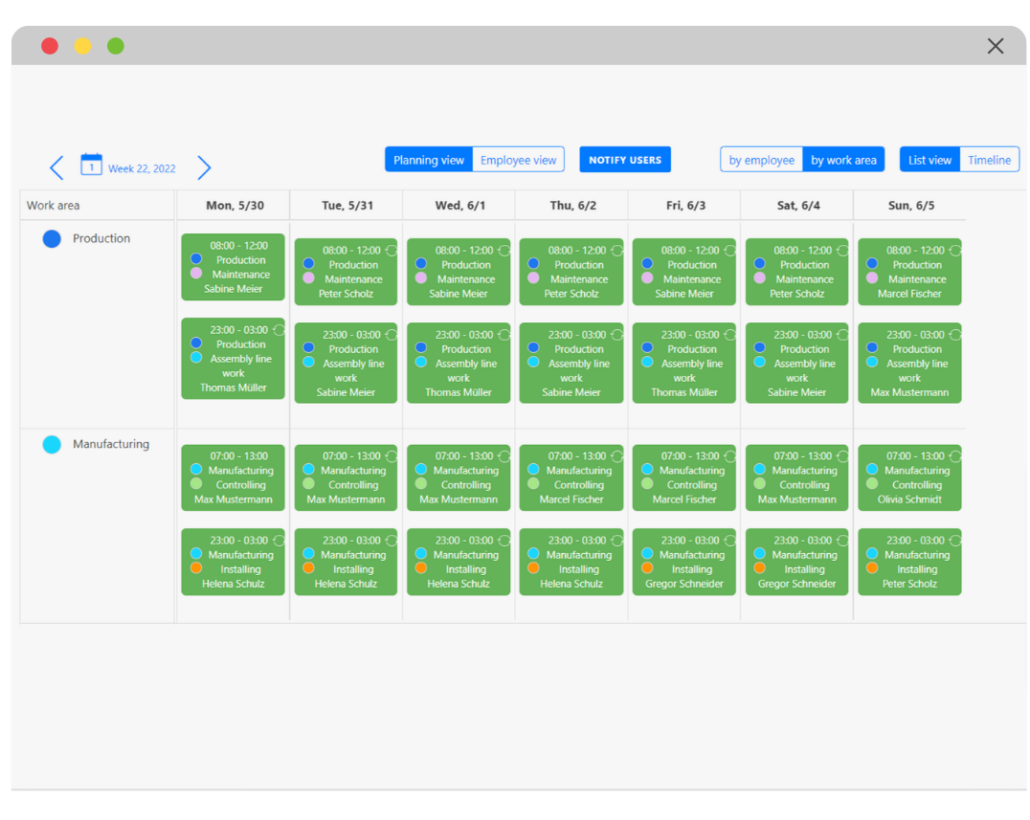
An essential component of staff skills training includes planning and executing an effective staff duty roster.
With TimeTrack Duty Roster, each employee is allocated to his or her respective work location so that you know where to assign them. Creating additional sub-areas for each work area allows for more detailed planning. Obviously, employees can be distributed across multiple work zones and locations.
3 important skills for staff training
When it comes to skills training, there are several essential skills that all employees must possess.
These consist of the following:

Dos and don’ts of staff skills training
Regarding skills training, there are several dos and don’ts to remember to ensure the effectiveness and success of your online training or programme.
What to do:
- Identify the specific skills your employees need to develop. This can be accomplished through a skills audit or by working closely with your employees to identify areas of improvement.
- Make the training programme pertinent to the duties and responsibilities of your employees. This can be accomplished by employing relevant scenarios and examples from the actual world.
- Provide continuous support, such as refresher training, counselling and mentoring, to ensure your personnel continue developing their abilities.
- Recognise and reward staff members who demonstrate a commitment to their professional development. This can include recognising staff members who have completed additional training or certification, providing staff members with opportunities to assume other responsibilities or leadership roles, and offering incentives such as bonuses or promotions for achieving specific learning and development goals.
What not to do:
- Avoid a one-size-fits-all approach to skills training, as not all employees possess the same skill set or qualifications. Instead, you should adapt your training programme to the unique requirements of each employee.
- Refrain from rushing the training process. Before continuing on to the next topic, allow your employees to take their time and ensure they thoroughly grasp the material.
- Don’t close the training without collecting employee feedback throughout the training process to ensure that they are engaged and that the training is fulfilling their requirements.
Essential training for your employees
Let’s examine some of the essential skills in which your staff should be trained.
Customer service skills are an absolute necessity for success in businesses of any industry. By providing customer service training to your employees, you can ensure that they can manage customer complaints and provide exceptional service to your customers.
Time management skills are essential for all employees, regardless of position. By providing your employees with time management training courses, you can assist them in effectively prioritising their duties and managing their time, resulting in increased productivity and efficiency.
In today’s diverse workplace, employees must have a solid understanding of diversity and inclusion. This helps them comprehend the significance and benefits of an inclusive workplace and how to collaborate effectively with coworkers from diverse backgrounds.
Whether or not your employees are in a sales role, sales skills are good for any position. By providing your employees with sales training, you can aid in developing their negotiation and persuasion skills, which can be helpful in various situations.
Cybersecurity training helps your employees comprehend the significance of safeguarding your organisation’s data and how to identify and prevent cybersecurity threats.
Conclusion
Skills development is an indispensable element of any successful organisation. By investing in the continuing professional development of your employees, you can equip them with the knowledge and skills required to execute their tasks effectively and contribute to the organisation’s success. It is also important in creating an attractive front for staff hiring.
Concentrate on essential skills such as customer service, time management, diversity and inclusion, sales, and cybersecurity to ensure your team is equipped to handle workplace challenges.
By prioritising skills training for your employees, you can boost employee morale and satisfaction, increase workforce productivity and efficiency, and ultimately enhance your organisation’s market competitiveness. Therefore, be bold and invest in the professional development of your employees; the benefits will be well worth it in the long-term.

Anja Bosiok ist Marketing Managerin bei TimeTrack und schreibt seit über drei Jahren über Zeitmanagement, moderne Arbeitswelt und digitale HR-Prozesse. Sie studierte Journalismus (Bachelor) sowie Publizistik- und Kommunikationswissenschaft (Magister) und verbindet redaktionelle Präzision mit tiefem Produktverständnis. Zuvor war sie als Content Managerin bei TimeTrack tätig und begleitet seitdem die Themen rund um Arbeitszeiterfassung und Personalorganisation – von der gesetzlichen Grundlage bis zur praktischen Umsetzung im Unternehmensalltag.

