


A standard error is setting imprecise actions or objectives. To ensure focus and clarity, goals should be specific and time-bound. As a result of ambiguity and perplexity, vague actions can impede progress.
Table of Contents
Smart planning is more than a process; it’s a mindset that embraces innovation, capitalises on insights, and propels organisations towards their objectives with precision and efficiency. Businesses can optimise efficiency, enhance processes, and achieve remarkable results by establishing distinct goals, employing data analytics, and involving stakeholders in smart planning strategies.
Definition
Smart planning is an essential procedure that enables businesses to establish specific objectives, measure their progress, and achieve their goals. It entails utilising data analytics, identifying hazards, and ruminating on concerns to develop innovative solutions and increase productivity. By implementing sound planning practices, businesses can optimise their operations and ensure they are on track to meet their objectives.

Leveraging data analytics for smart planning
Effective use of data analytics for decision-making is a vital aspect of smart planning. In today’s data-driven society, businesses have ample access to a wealth of data that can be harnessed to gain valuable insights and make well-informed decisions. By analysing data, companies can identify patterns, detect trends, and uncover opportunities for optimisation, thereby enhancing the efficiency of their planning processes.
Data analytics empowers businesses to evaluate the effectiveness of their strategies and measure their progress accurately. It offers a comprehensive understanding of present circumstances, enabling companies to fine-tune and enhance their planning approaches accordingly.
Smart planning for employee management
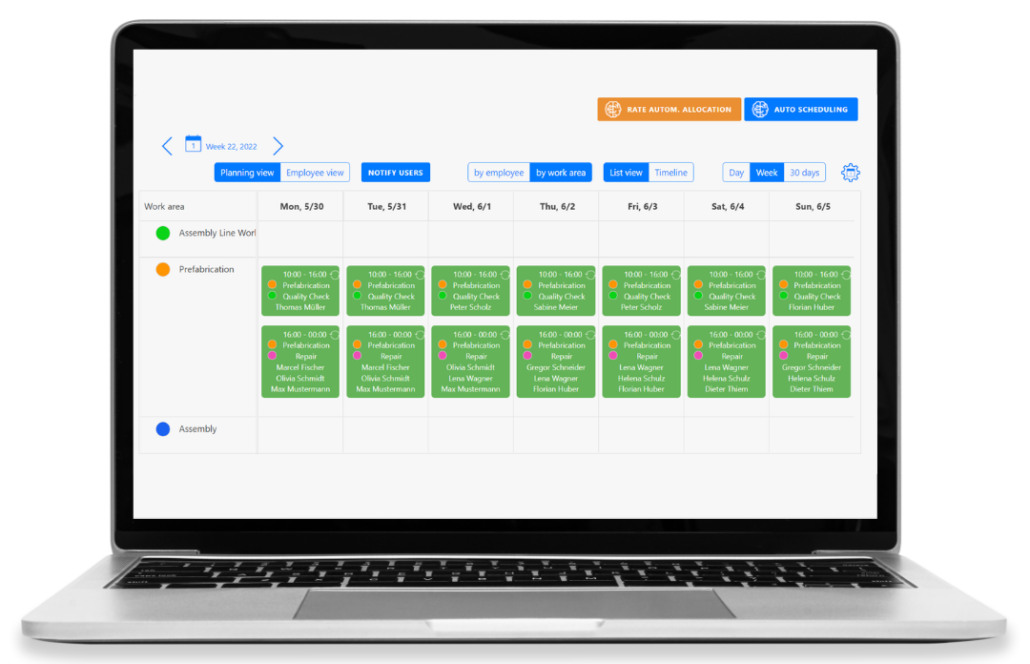
Businesses can establish measurable and attainable objectives with a thorough understanding of the data. The Employee Scheduling software of TimeTrack enables administrators to create employee assignments with a few keystrokes.
They are able to schedule shifts according to employee schedules and choose their preferred shift duration. The employees are able to request vacant shifts and switch shifts with other employees. The schedules can be repeated whenever necessary.
Improving efficiency through smart planning
Intelligent planning aims to enhance productivity by addressing identified issues and streamlining processes. Regular evaluation and reflection on the planning procedure enables businesses to identify potential bottlenecks, inefficiencies, and hazards. This approach ensures that the planning process remains dynamic and adaptable to changing conditions.
To ensure the efficiency of the planning procedure, it’s smart to involve all relevant parties. By soliciting input and encouraging constructive feedback from various perspectives and areas of expertise, businesses can tap into a diverse range of insights.
This collaborative strategy fosters a sense of ownership and responsibility among the involved parties, ultimately leading to improved outcomes.

Smart planning and key performance indicators (KPIs)
Thoughtful planning relies heavily on key performance indicators (KPIs). They provide businesses with measurable benchmarks for attaining their objectives. Companies can monitor progress, measure success, and identify improvement areas by defining KPIs.
When establishing KPIs, take time to consider the specific risks, threats and obstacles that could impede progress. By identifying these stumbling blocks, businesses can develop mitigation strategies and ensure a smoother path to accomplishing their goals. Regular management reviews will help in monitoring KPIs and provide valuable insights into the progress evaluation as a whole.
Avoid these mistakes with smart planning
While careful planning offers numerous advantages, it is essential to be aware of common mistakes that can compromise the process’s efficacy.
Establish SMART Goals
Establish goals that are specific, measurable, attainable, realistic, and time-bound. This provides clarity and a basis for measuring progress, and is also a factor to offer constructive challenge to the team.
Tip
Consider the results from planning strategies and draw lessons from successes and failures. Use this information to enhance future decision-making and planning processes. By adhering to a roadmap, businesses can implement intelligent planning practices that increase efficacy, enhance outcomes, and sustainable expansion.
Conclusion
Thoughtful planning is the key to success in today’s competitive business environment. By leveraging data analytics, proactively identifying risks, and employing KPIs, businesses can optimise efficiency, make informed decisions, and achieve exceptional results.
Adopt the power of strategic planning to overcome obstacles, seize opportunities, and chart a course for sustainable growth. Plan intelligently, adapt quickly, and embrace the potential of strategic thinking to achieve future success.

Anja Bosiok ist Marketing Managerin bei TimeTrack und schreibt seit über drei Jahren über Zeitmanagement, moderne Arbeitswelt und digitale HR-Prozesse. Sie studierte Journalismus (Bachelor) sowie Publizistik- und Kommunikationswissenschaft (Magister) und verbindet redaktionelle Präzision mit tiefem Produktverständnis. Zuvor war sie als Content Managerin bei TimeTrack tätig und begleitet seitdem die Themen rund um Arbeitszeiterfassung und Personalorganisation – von der gesetzlichen Grundlage bis zur praktischen Umsetzung im Unternehmensalltag.

