


Delegative leaders must be adaptable and malleable to process changes. They should be willing to modify their strategy based on the requirements of their team and the undertaking.
Table of Contents
Great leadership is critical to the success of any organisation. The leadership style employed can make or destroy a team, department, or entire company. There are numerous leadership approaches, each with a unique set of benefits and drawbacks.
Delegative leadership, also known as laissez-faire leadership, is one such style. In this leadership style, decision-making authority is delegated to subordinates, allowing them to take charge of the work process.
Although this style of leadership can be highly effective in certain circumstances, it requires a unique set of skills and characteristics to be successful.
Definition
Delegative leadership is typified by a hands-off approach to decision-making. The leader delegates authority to subordinates, allowing them to make independent decisions. This leadership style can be effective when assistants are highly competent and experienced, and the leader trusts their judgement. In situations where the leader is not an expert in the field of work and subordinates have more knowledge and experience, delegation can also be beneficial.

How does delegative leadership manifest itself?
In the delegating leadership style, the leader provides subordinates with the resources necessary to complete the task but also needs to provide detailed instructions or guidance on how to do so. The leader establishes the project’s objectives and expectations but leaves it to the subordinates to determine how to achieve them.
This style of leadership is applicable and yields good results when subordinates are highly motivated and self-directed. However, it can be problematic when assistants need more direction or clarity about their responsibilities.
Delegation and prioritisation are essential skills for effective leadership and management.
Delegation involves assigning tasks to others who are best suited to perform them, while maintaining accountability and oversight. Prioritisation involves determining which tasks are most important and should be completed first, in order to achieve strategic goals. By mastering delegation and prioritisation, leaders can leverage the strengths and abilities of their team members and ensure that resources are allocated effectively.
Good leaders know how to manage time
A good leader and HR professional always monitors the company’s progress and tracks their employees’ time to ensure that everyone is working productively.
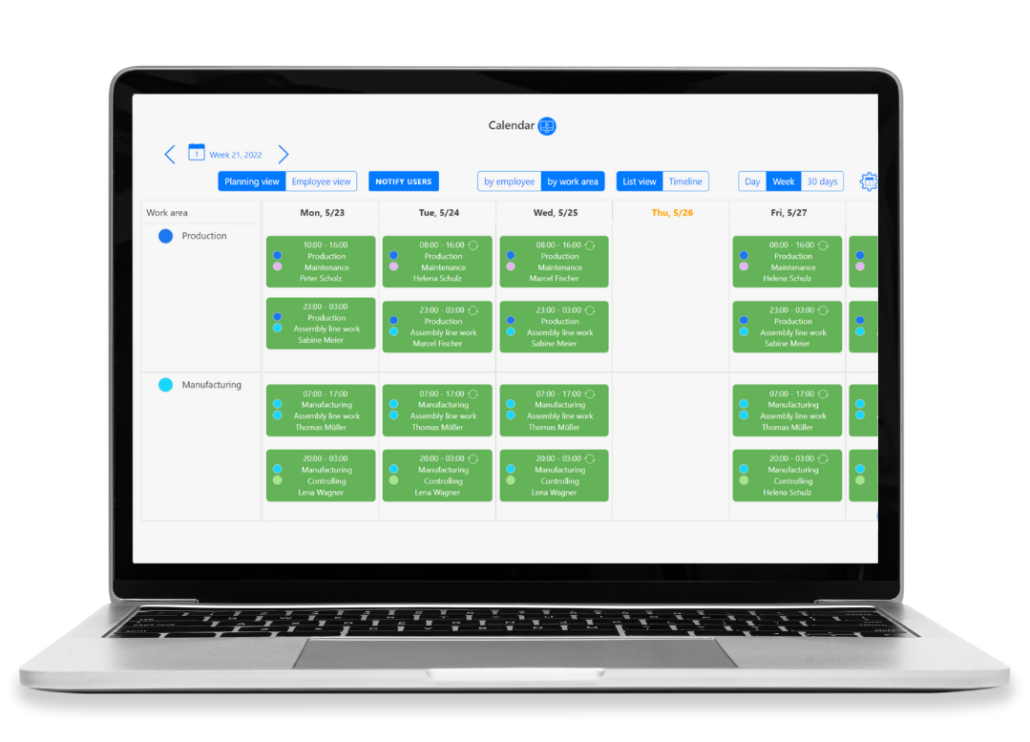
With TimeTrack Shift Planning, managers can allocate shifts to employees based on their relevant, skills, locations and available hours. Availabilities can easily be shortened or extended by click and drag. In addition, employees can leave notes to briefly describe the reason for their short availability. This simplifies the communication process between the employee and the planner, as the planner can access the notes by double-clicking on the period in the calendar view.
Primary characteristics of a delegative leader
A delegative leader trusts their team members to make decisions and assume responsibility for their work. This management style involves having confidence in their team’s abilities and giving them the authority to make decisions.

Are there advantages to being a delegative leader?
There are numerous delegative leadership benefits. Here are some examples:
A leader who is able to delegate can significantly increase team productivity and employee satisfaction by assigning work to the members of the team who are best suited to perform them. When team members are empowered to make decisions and act independently, they are frequently more motivated and productive.
Delegating tasks can help employees develop new skills and gain invaluable experience. When assigned complex duties, team members are more likely to acquire learn and grow as individuals.
Want to boost out-of-the-box thinking? Delegating tasks can also result in increased creativity and innovation. When team members have the autonomy to make decisions and act independently, they are more likely to generate smart ideas and solutions.
When staff are granted autonomy and control over their work, they are also more likely to experience job satisfaction and engagement.
By delegating tasks to team members, managers can reduce their own workloads and devote more time to strategic duties.
Tip
Consider a talent mobility programme to provide opportunities for employees to improve their abilities and gain more experience via work rotations and collaborative projects spanning several departments.
This endeavour can contribute to the development of a workforce that is more adaptable and competent while ensuring that the demands of the company are addressed.
Unlocking success through delegation
It is very necessary to put together a workforce who are skilled and motivated. This calls for efficient approaches to employee recruiting and training, as well as continuous support and advancement opportunities for current staff members.
You can never go wrong with clear and concise communication. A delegative manager is responsible for successfully and clearly communicating with their subordinates, as well as providing them with the tools and assistance they need to execute tasks on their own. In the same vein, the manager in charge of overseeing the job should avoid micromanaging the process as this might lower the subordinates’ motivation and restrict their autonomy.
Lay out clear objectives and standards for the project or activity that is currently being worked on. Everyone must have clarity on their deliverables and deadlines.
The delegative leader has to have the willingness to give feedback and support whenever it is required. This calls for a certain amount of flexibility as well as an openness to creative ideas and approaches. Aim to be receptive to all ideas.
In the end, it is the role of leaders to instill confidence in their employees, while allowing them to the time and opportunity to learn, grow and develop through independent work.
Conclusion
Leadership through delegation is a powerful tool that can unleash the potential of highly competent and motivated teams. It offers a unique and transformative leadership style that enables subordinates to take charge of the work process while the leader assumes a more supportive role.
While this leadership style may not be appropriate in all situations, it can be highly effective when employees possess the necessary skills and motivation to succeed. To be successful at delegative leadership, leaders must have strong communication, delegation, and trust-building skills. They should also be willing to provide feedback and support when necessary.
By mastering these abilities, leaders can leverage the power of delegative leadership to drive success and achieve company goals. Whether you are a leader or team member, it’s essential to consider the benefits of delegative leadership and how it can be used to create a more successful and productive team.

Anja Bosiok ist Marketing Managerin bei TimeTrack und schreibt seit über drei Jahren über Zeitmanagement, moderne Arbeitswelt und digitale HR-Prozesse. Sie studierte Journalismus (Bachelor) sowie Publizistik- und Kommunikationswissenschaft (Magister) und verbindet redaktionelle Präzision mit tiefem Produktverständnis. Zuvor war sie als Content Managerin bei TimeTrack tätig und begleitet seitdem die Themen rund um Arbeitszeiterfassung und Personalorganisation – von der gesetzlichen Grundlage bis zur praktischen Umsetzung im Unternehmensalltag.

